Beef export update April 2026
April 2026 - Beef export update
Australia’s beef export performance in April 2026 remained firmly in a high throughput phase, with total shipments reaching 140,943 tonnes. While slightly below the near record pace seen in March, April volumes were still 11 percent higher than the same month last year and sat 61pc above the five year average. This result reinforces the strength of the current supply cycle, with elevated cattle availability continuing to support strong export flows across a broad range of global markets.
The United States retained its position as Australia’s largest export destination in April, taking 40,999 tonnes of beef. Volumes to the US were 10pc higher year on year and an exceptional 107pc above the five year average, underlining the structural demand coming from a market facing ongoing supply constraints.
The US accounted for 29pc of total exports during the month, continuing to anchor Australia’s export program and absorb a significant share of incremental production.
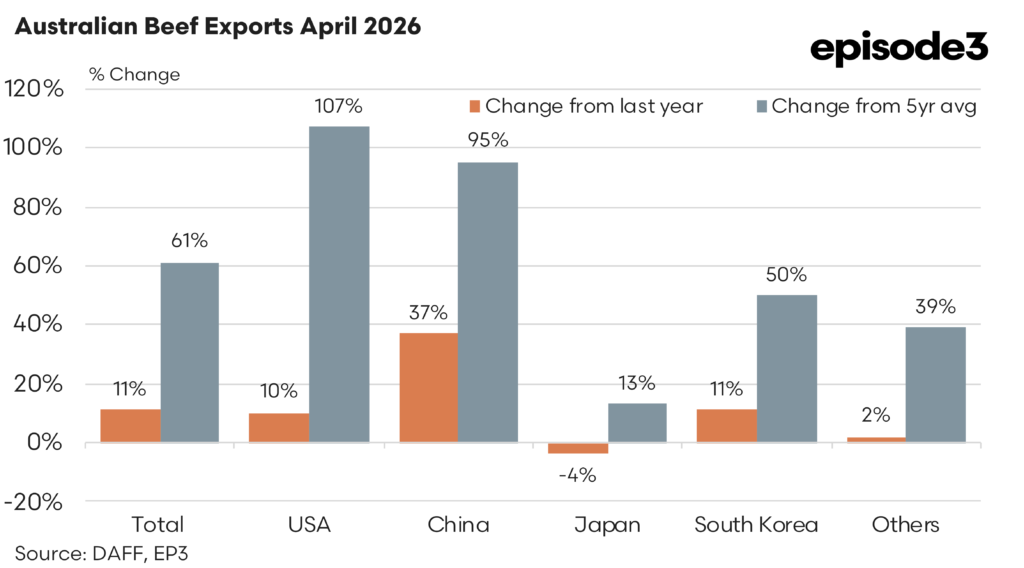
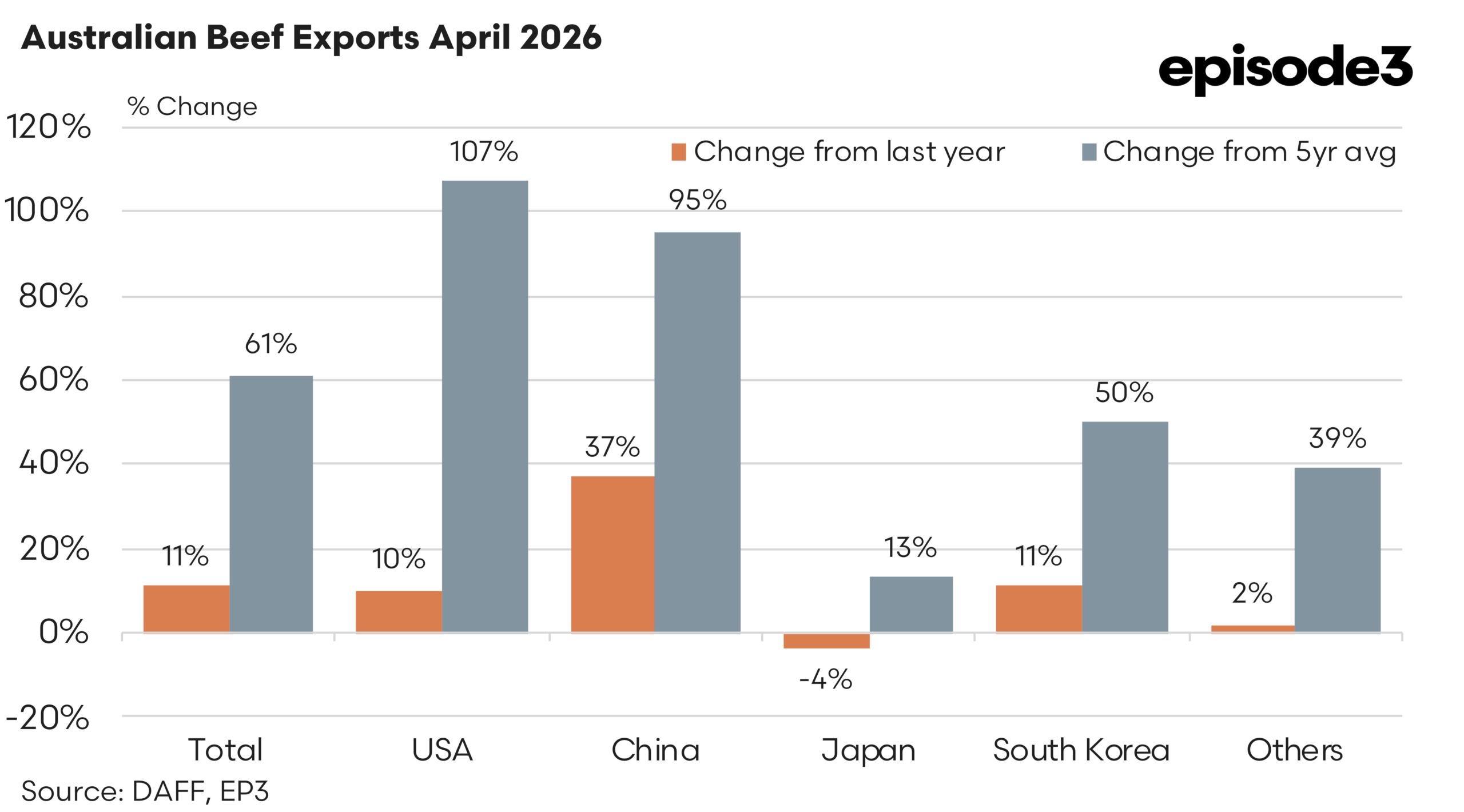
China remained the second largest destination, with shipments totalling 29,583 tonnes. Export volumes were up 37pc compared with April last year and sat 95pc above the five year average, reflecting strong demand early in the calendar year.
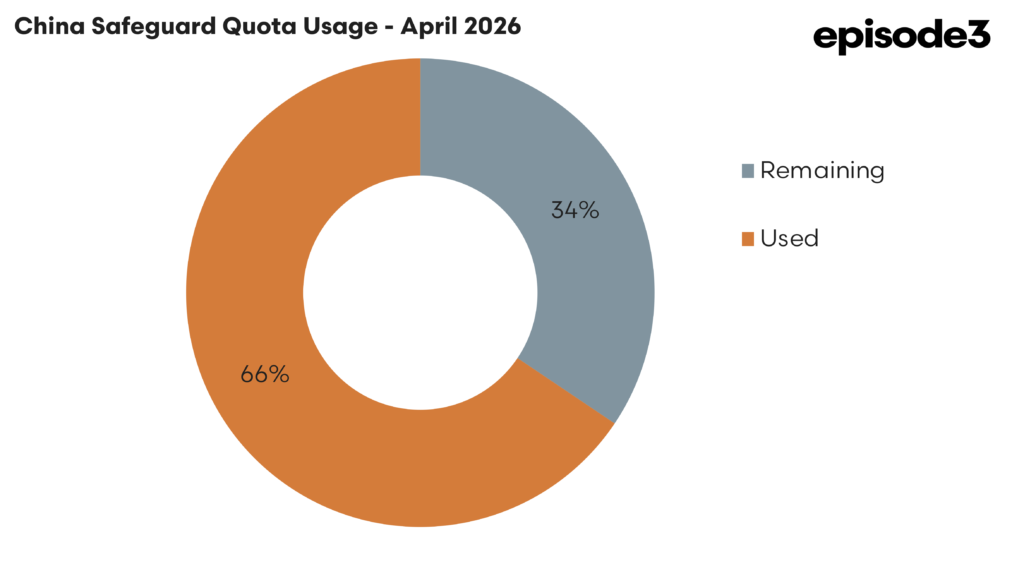
However, the pace of shipments continues to be influenced by safeguard quota dynamics. By the end of April, approximately 66pc of the annual quota had already been utilised, leaving just 34pc remaining for the rest of the year. This rapid drawdown highlights the extent of front loading in trade flows and raises the prospect of tighter export conditions into China later in 2026 as quota limits become more binding.
South Korea emerged as the third largest destination in April, with exports reaching 22,365 tonnes. This represents an 11pc increase on last year and places South Korea ahead of Japan in the annual rankings.
Volumes into South Korea were also 50pc above the five year average, reflecting strong demand conditions and reinforcing its position as a key growth market for Australian beef. The shift in ranking is notable, as it highlights the evolving structure of Australia’s export portfolio, with South Korea consolidating its role among the top tier destinations.
Japan, which traditionally occupies a top three position, moved to fourth place in April with shipments of 20,504 tonnes. Export volumes were marginally lower than last year, down 4pc, but still 13pc above the five year average.
This suggests that while demand from Japan remains stable, it is not expanding at the same rate as seen in other major markets such as South Korea or China. Japan continues to provide a consistent base for Australian exports, but its relative importance is gradually being reshaped by stronger growth elsewhere.
Exports to all other destinations combined totalled 27,492 tonnes in April. Volumes were 2pc higher than last year and 39pc above the five year average, indicating steady performance across a diverse group of secondary markets.
While these destinations do not individually rival the scale of the major markets, collectively they play an important role in maintaining balance across the export program and providing additional outlets for Australian beef.
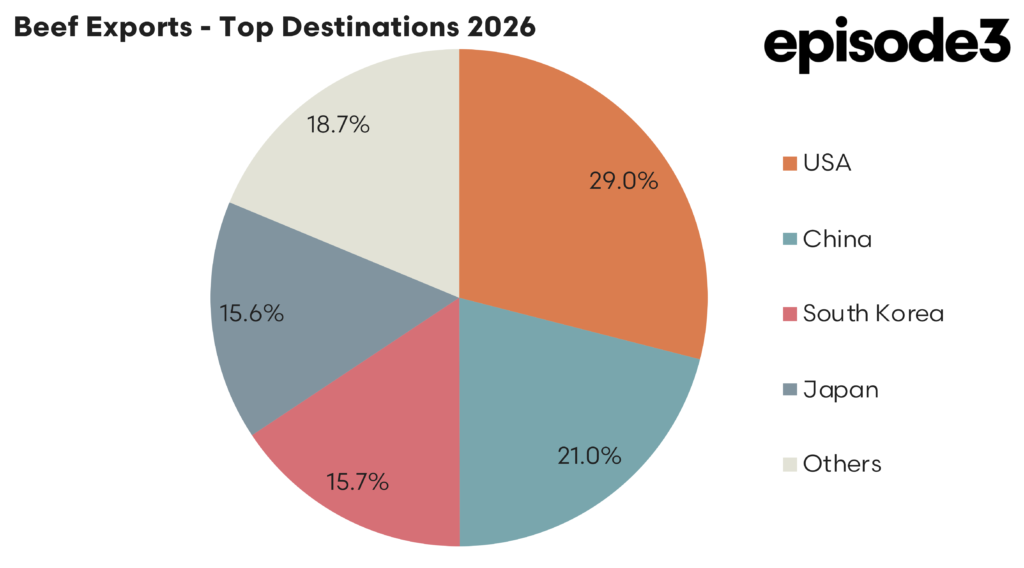
In terms of market share, the distribution of exports remains relatively well balanced across the major destinations. The United States accounted for 29pc of total shipments, followed by China at 21pc, South Korea at 15.7pc and Japan at 15.6pc, with the remaining 18.7pc spread across other markets.
This relatively even spread across the top destinations provides resilience, ensuring that shifts in demand from any single market can be partially offset by strength elsewhere.