Why do Australian grain growers need to keep an eye on corn?

Market Morsel
Australia does not grow much corn, so it is easy to think of corn as a US, Brazilian or Chinese market story. For local growers, the day-to-day focus is wheat, barley, canola, pulses, fertiliser, rainfall and basis. Corn is one of the main price-setting crops in the global feed grain complex, and wheat often gets pulled into the same conversation.
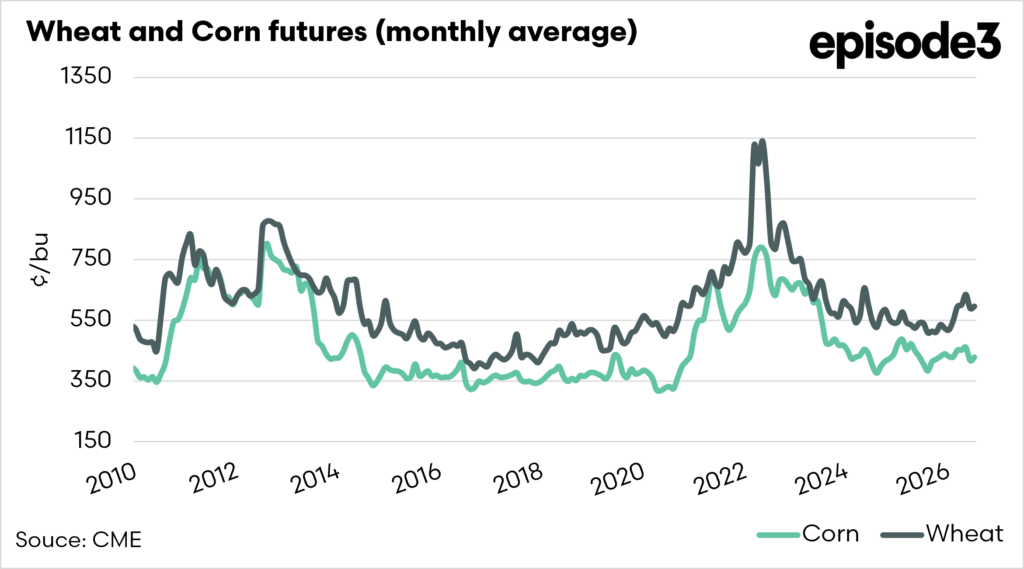
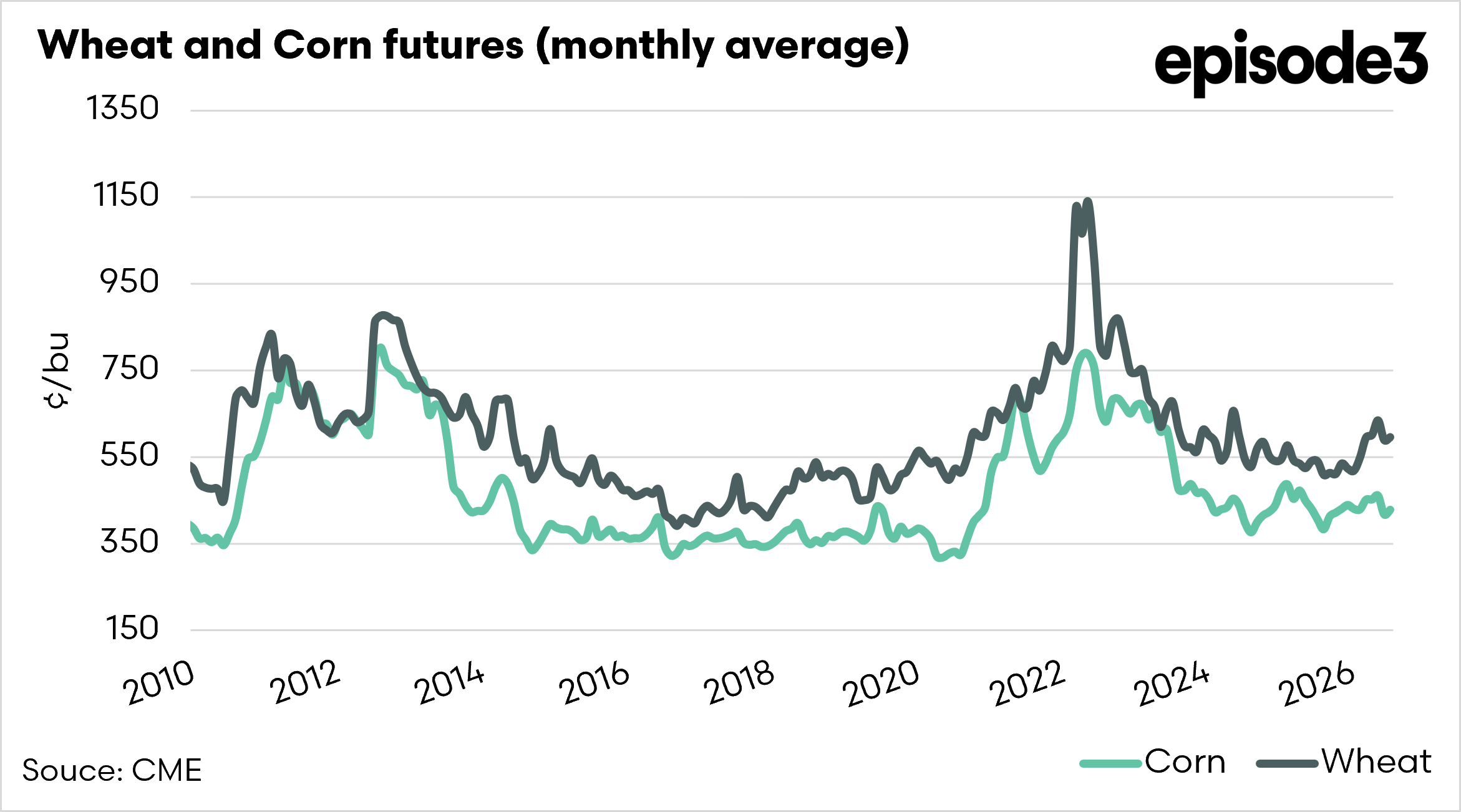
The monthly price data back to 2000 shows the connection. Corn and wheat do not move together every month, and wheat can break away when milling demand, Black Sea risk, drought, quality problems or export restrictions take over. But the two markets have followed the same broad cycles often enough that corn deserves a regular place on the watchlist for Australian wheat producers.
The biggest reason is feed substitution. Corn, feed wheat, barley and sorghum all compete in livestock rations. Buyers are comparing energy value, protein, freight, availability and price. If corn becomes expensive, feed wheat can become more attractive. If corn falls sharply, it can make it harder for feed wheat to hold a premium. That matters because a large share of global wheat trade is not just about flour milling. It is also about where wheat fits against other feed grains.
Corn also matters because it is the largest and most liquid feed grain market. When US corn futures move on Midwest pollination weather, Brazilian safrinha production, South American planting delays or European heat, the shift is not contained neatly inside the corn market. Traders reassess the broader feed grain balance. Wheat and barley get marked against that new price signal, even when their own local fundamentals have not changed much.
There is also the acreage link. In the northern hemisphere, corn, wheat and soybeans compete for land, fertiliser, machinery time, storage and working capital. Strong corn margins can encourage more corn planting. Weak corn margins can push the area elsewhere. Those decisions alter the supply outlook across the wider grain and oilseed complex.
Speculative money adds another layer. Funds often trade grains as a basket, particularly when weather risk or macro sentiment changes quickly. A sharp corn rally can drag buying into wheat. A heavy sell-off in corn can weigh on wheat, even when the wheat story is not the main driver.
For Australian producers, corn does not set the local wheat price on its own. Local rainfall, crop size, freight, currency, domestic demand and export basis still matter. But corn influences global feed demand, substitution, acreage decisions and market sentiment. Ignoring it means missing one of the bigger signals behind wheat pricing.