Market lessons: How much of your crop should you hedge (or forward sell)?
Market Lessons
Hedging can reduce price risk, but it has another side. If a grower hedges too much grain and production later disappoints, the hedge itself can become a source of risk.
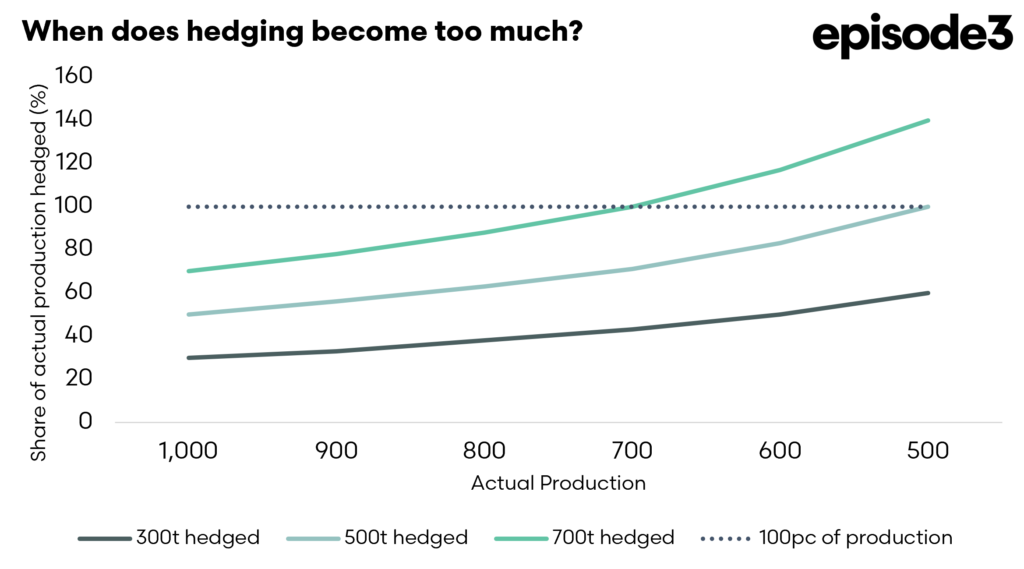
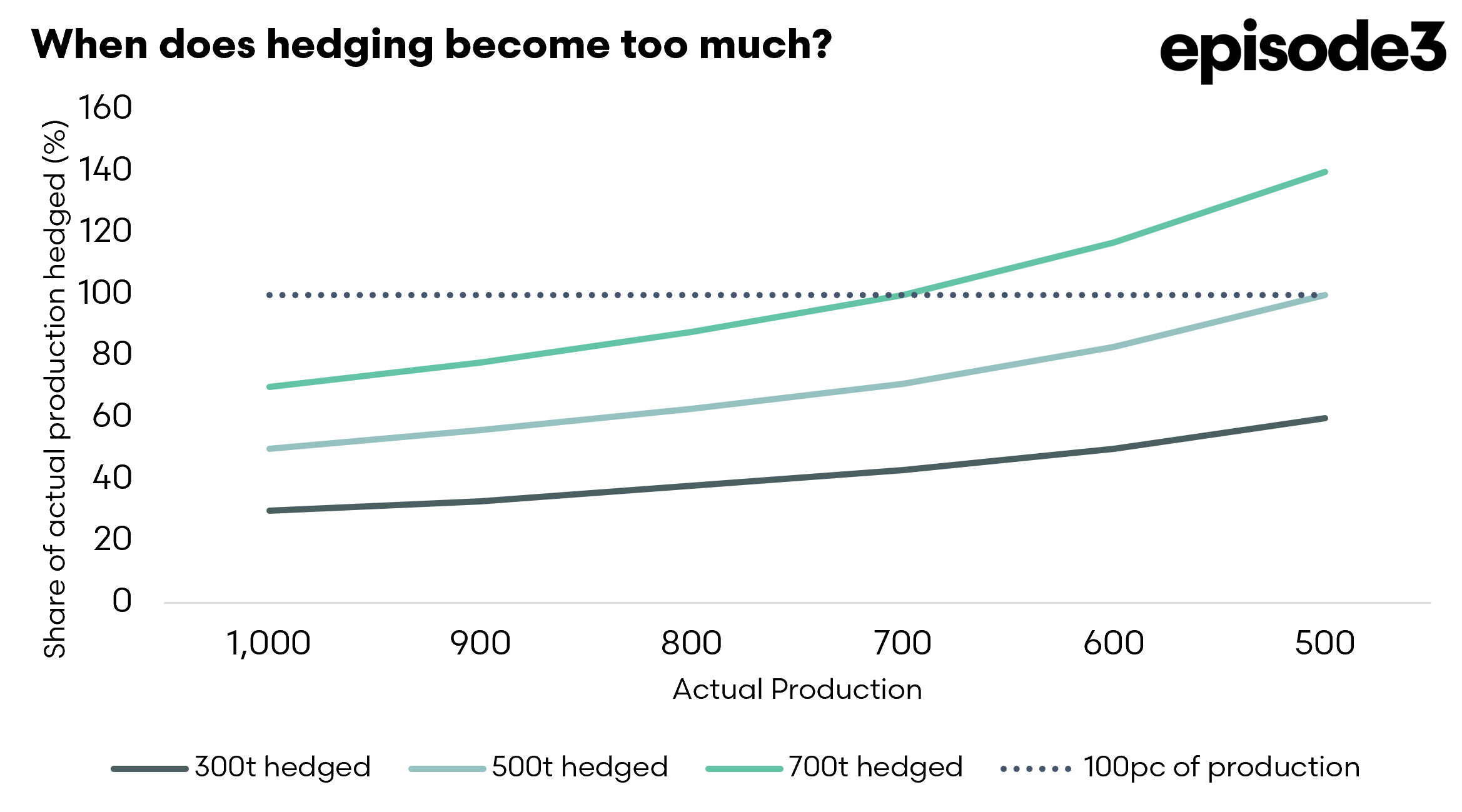
Assume a grower expects to produce 1,000 tonnes of wheat. If they hedge 300 tonnes, that represents 30pc of expected production. A 500-tonne hedge represents 50pc, while a 700-tonne hedge represents 70pc.
If production ends up close to expectations, those percentages are easy to understand. But seasonal conditions can change quickly, and the tonnes actually harvested may change from what was expected when the hedge was first put in place.
If production falls to 800 tonnes, a 700-tonne hedge now represents nearly 88pc of the crop. If production falls further to 600 tonnes, that same 700-tonne hedge represents around 117pc of actual production.
At that point, the grower has hedged more grain than they have produced.
This matters because a hedge is most useful when it matches physical grain. If a grower has a financial hedge over tonnes that no longer exist, part of that position is no longer offsetting the value of grain in the paddock or silo. It has effectively become an exposed market position that may need to be reduced or closed.
That does not mean growers should avoid hedging early. It means the amount hedged should reflect confidence in production at the time of the decision.
A crop that is only recently established carries much more production uncertainty than a crop approaching harvest. Seasonal conditions, frost, heat, disease and rainfall can all change the likely tonnage. Quality adds another layer of uncertainty if the hedge or physical contracts are based around a particular grade.
Existing forward sales also need to be considered. A grower who has already committed physical grain should not look at a swap or futures hedge in isolation. What matters is the total amount of production already committed or protected across the whole marketing program.
No single percentage is right for every farm. Some businesses may be comfortable hedging a larger proportion earlier, while others prefer to increase coverage as production becomes more certain.
The key lesson is that hedging is not simply about price. It is also about matching the amount protected to the amount of grain you are reasonably confident you will produce.
The more uncertain the crop, the more important it is to leave room for production to change. This applies to hedging and to forward selling physical grain.